Phase 1: Urban Forest Assessment
- Tree Canopy Analysis
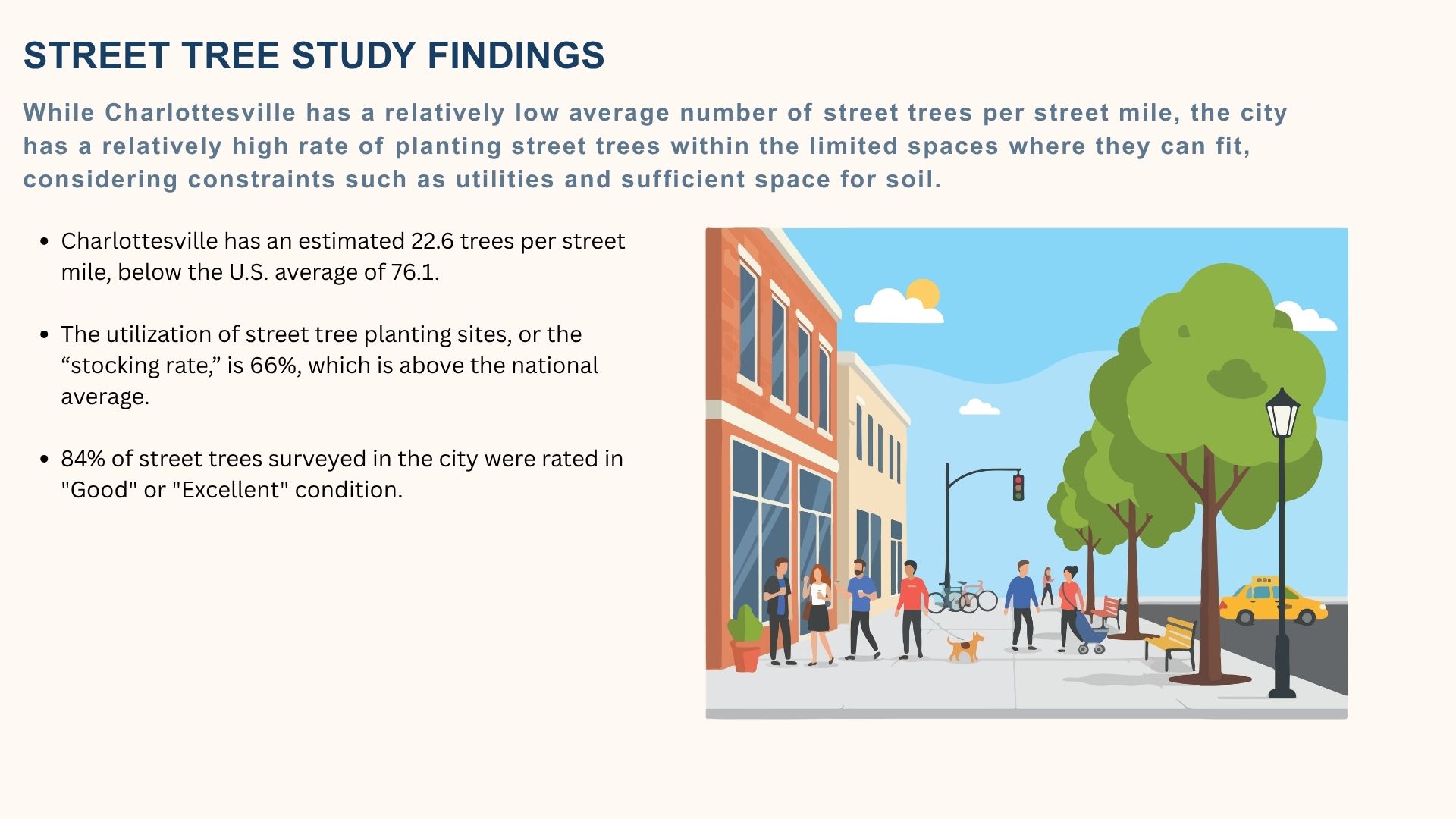
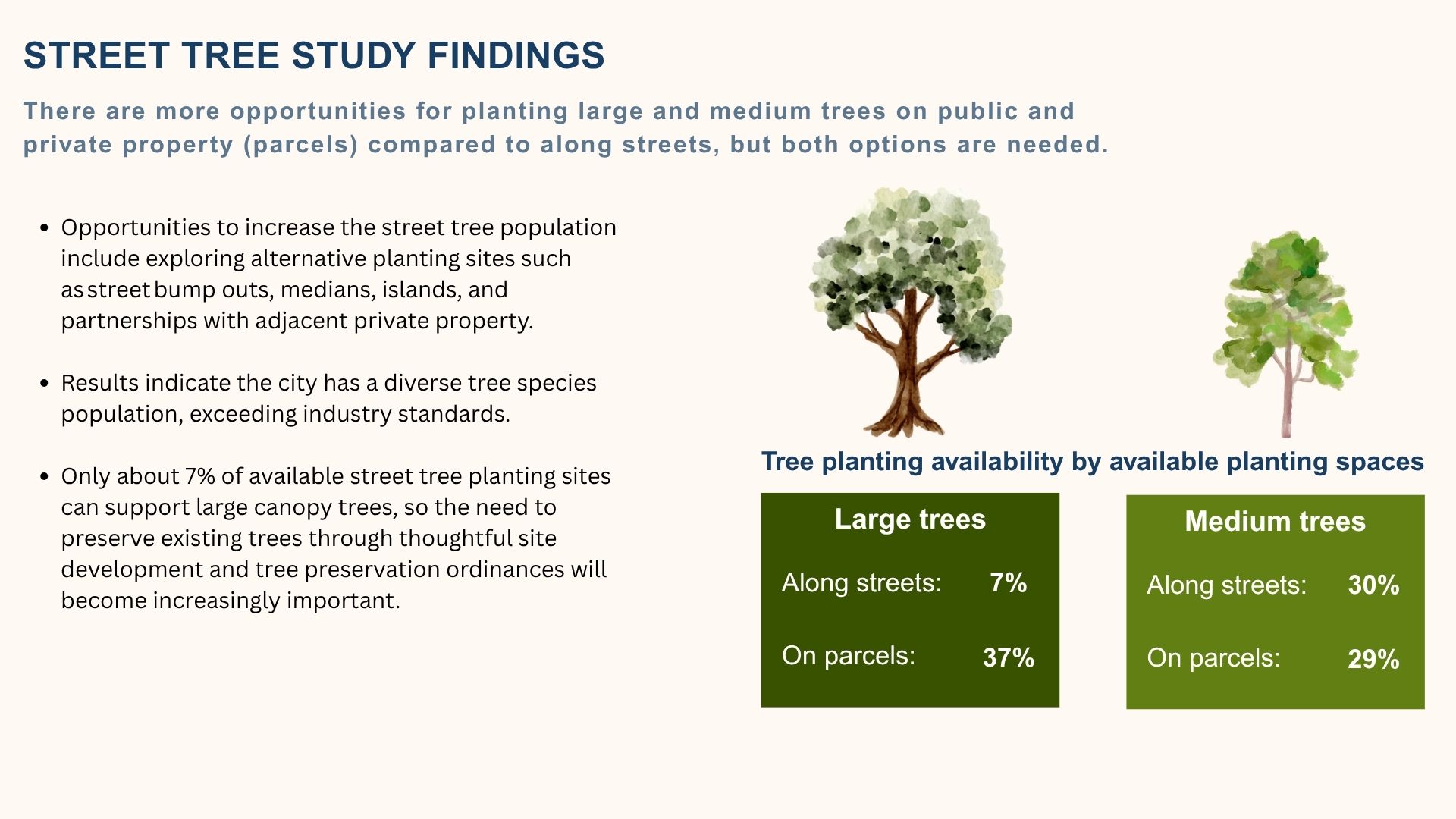
- Street Tree Study
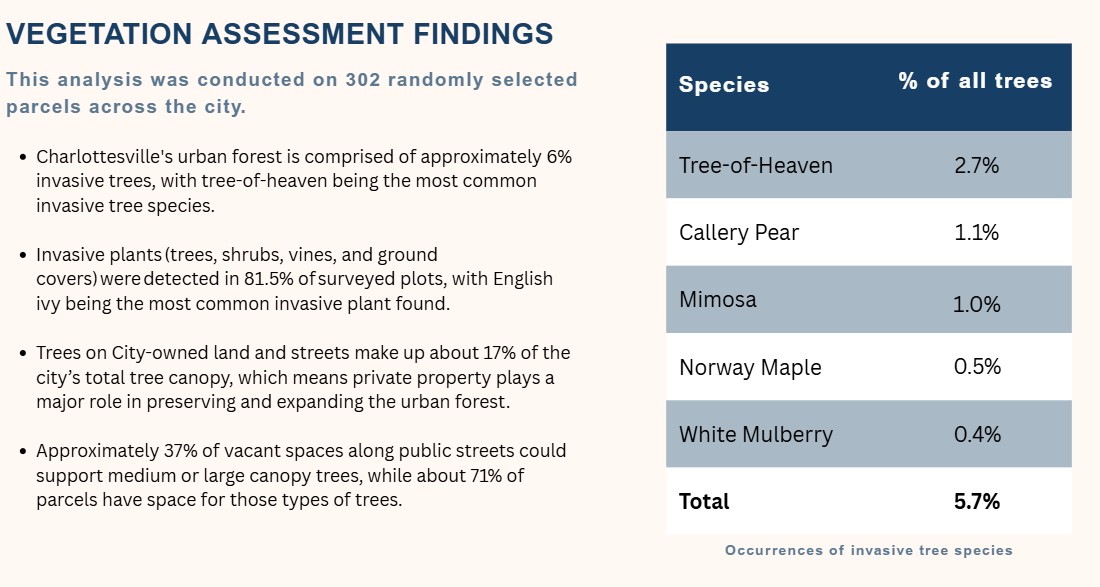
- Vegetation Assessment
- Identify preliminary challenges and opportunities to address in the Urban Forest Management Plan

The City of Charlottesville is working with Eocene Environmental Group to develop an updated Urban Forest Management Plan (UFMP). The UFMP will provide recommendations for street trees, prioritizing tree planting locations, tree preservation and maintenance, and tree canopy expansion on both public and private properties.
Key project components include:
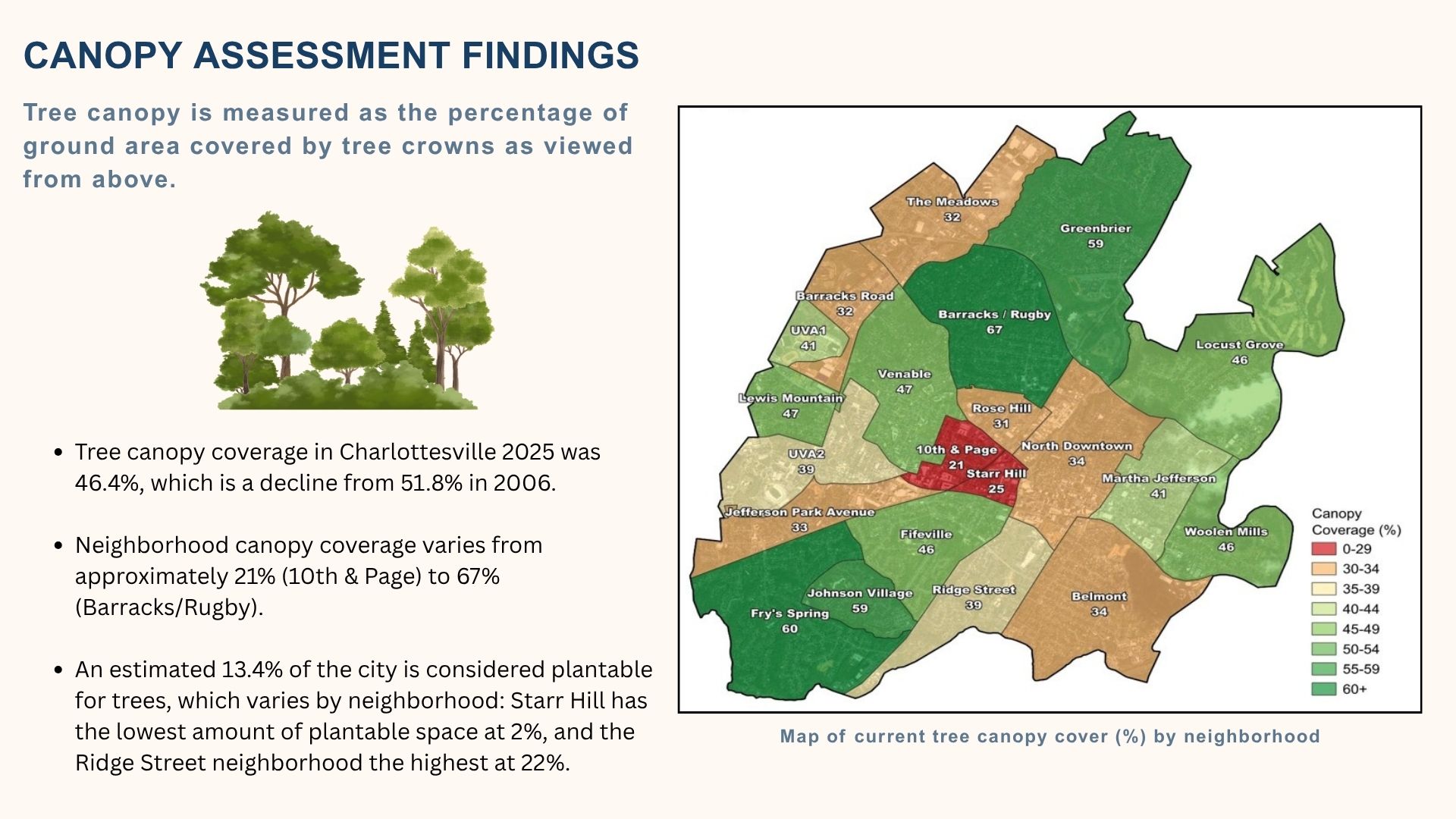
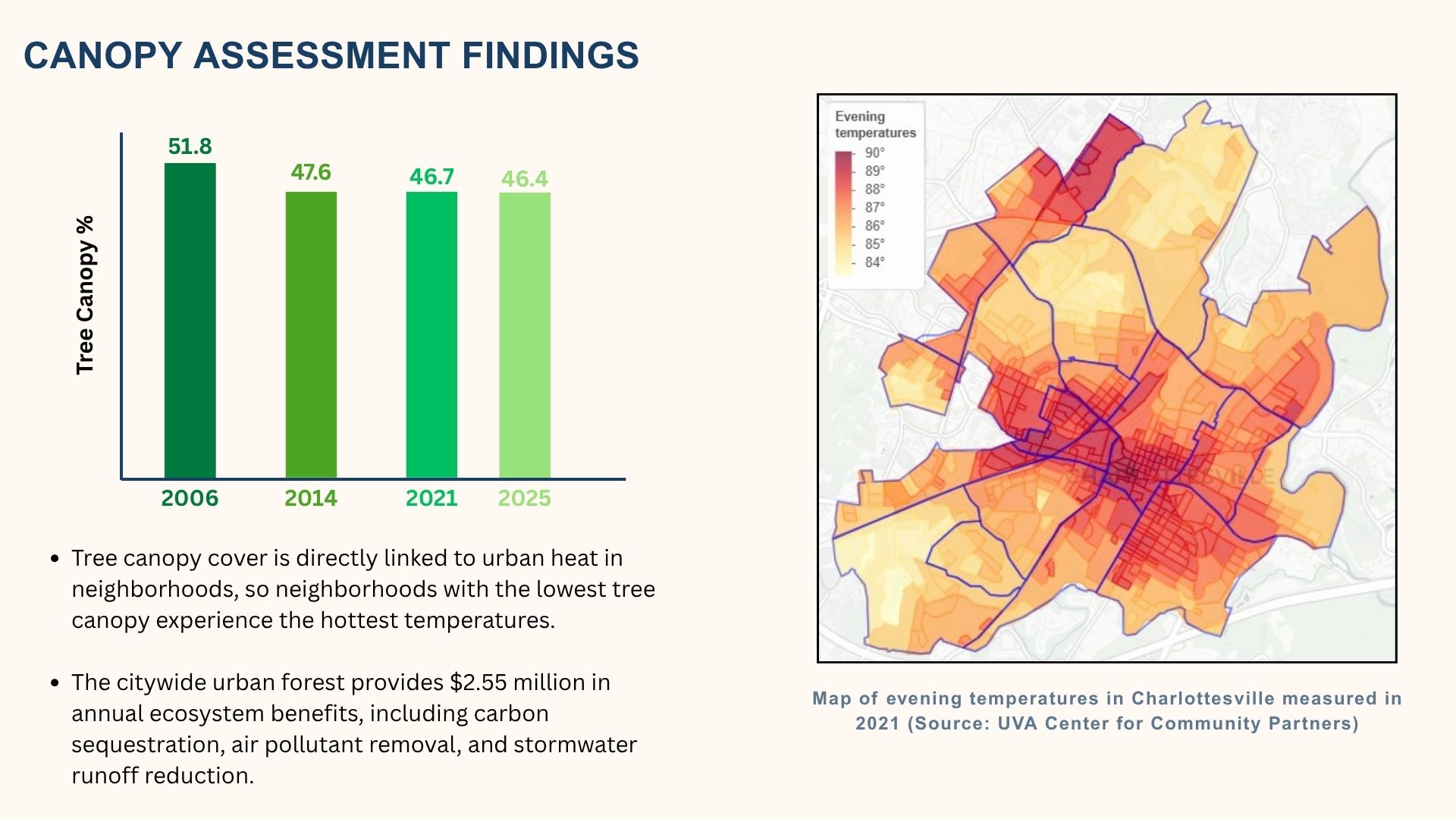
The City undertook a comprehensive urban forestry assessment in 2025 to evaluate its current tree canopy, street trees, and vegetation across public and private lands. This study aimed to inform policy, prioritize planting, and guide future management by integrating three components: a high-resolution tree canopy analysis using historical and current data, a street tree survey, and a citywide vegetation assessment. Below are some key findings:
Image 1 of 5
Trees play a major role in our lives and in our urban environment. We appreciate them for their aesthetic beauty, for their cooling shade, for their ecosystem services, and for the ways they enrich our homes, parks, playgrounds, and streetscapes, and set the stage for our outdoor activities.
It has become evident in recent years that our urban forest should be seen as a critical part of our urban infrastructure, as the benefits of our urban forest are many and diverse.
Trees support our neighborhood infrastructure by fostering vibrant and walkable neighborhoods. Tree-shaded homes and buildings reduce energy costs, conserving energy and lowering energy costs for community members. Trees perform an important function in addressing climate change by removing carbon from the atmosphere (carbon sequestration).
Trees are also a vital part of our healthcare infrastructure. Research has proven that a robust urban forest has many beneficial health effects–including lower levels of illness and disease, reduced stress levels, increased respiratory function, improved mental health, increased outdoor physical exercise.
A robust urban tree canopy supports the health of community members and the natural environment. It is critical for healthy biodiversity and wildlife corridors.
Trees mitigate the impacts of extreme heat and high humidity days by effectively cooling the air and offering shade for buildings, public spaces, and individuals engaged in outdoor activities; and they mitigate the impacts of intense storms and flooding events by acting as natural sponges that absorb runoff, prevent erosion, and filter pollutants to preserve the health of waterways and aquatic habitats.
Periodic updates to the Urban Forest Management Plan and supporting data are important to track changes to the urban forest over time and ensure the City is using today's best practices. City Staff and the City's Tree Commission collaborate each year to publish a 'State of the Forest' report, tracking tree planting and removal activities, invasive species management, forest restoration projects, and public education activities.
This project supports the Environmental Regulations and Policy Review project by providing data and analysis, community input, and recommendations for planting and protecting trees during development, street trees, and other programs and policies.
Please share project related questions below:
To ask a question you must create an account or log in.
These are the people that are listening and responding to your questions.

Director of the Office of Sustainability

Urban Forester
Management Specialist II Landscape
Long Range Planner
{{question.description}}


Have questions or want to learn more about a project, contact us below:
| connect@charlottesville.gov | |
| Website | www.charlottesville.gov |